Retreat Through the Wet Wasteland (Japan, 1973) – 4/5
Yukihiro Sawada’s ground breaking police corruption film and the birth of modern Japanese antihero in cinema. Takeo Chii (in one of the most memorable roles of his career) and Akira Takahashi play two cops hunting down a former colleague theirs that escaped from a mental institute and now forms a risk factor for the police department. Sawada keeps the pace fast, but still finds time for character close ups. Handheld cinematography and long takes (the longest one running several minutes) are used effectively. The screenplay is by Kazuhiko Hasegawa, the director of The Man Who Stole the Sun.
Zoom in: Rape Appartments (Japan, 1981) – 3,5/5
Naosuke Kurosawa’s debut features a scrip worth zero, plus your usual load of unnecessary sex scenes, but technically this japanese giallo thriller is amazingly well done. The cinematography and framing put almost any big budget thriller into shame, and the audio design is even more impressive. The ending is nothing short of jaw dropping.
Woman in the Box II (Japan, 1988) – 3,5/5
Out of complete darkness comes Masaru Konuma’s melancholic horror gem. Set in a ski resort it’s a Psycho type of thriller of a man who kidnaps and tortures his customers. The contrasts between the beautiful mountain landcapes and dirty cellars work to the fullest. Cinematography is good, but most impressive is the atmospheric soundtrack. While hurt by Nikkatsu’s usual genre film requirements, this remains a completely unique piece of work, and a small diamond in the director’s trash filmography.
What asian film/series have you just seen.. marks out of 5
-
HungFist

- Bruce Lee's Fist
- Posts: 11932
- Joined: 14 Dec 2005, 15:50
- Location: Japan

-
Knetan

- Hail the Judge!
- Posts: 2009
- Joined: 12 Mar 2006, 12:57
- Location: Sweden
-
gasteropod
- Bruce Lee's Fist
- Posts: 6868
- Joined: 03 Nov 2004, 18:16
The Accidental Spy: 3/5
I've finally seen this after all this time! I always avoided buying it due to it being cut and dubbed versus a non-anamorphic transfer on the uncut version. I thought this was fairly decent, although the majority of the English dialogue is barely understandable, and certain things just come out of nowhere, like the 'Speed' ripoff at the end lol. I liked the scene where he was running around in the nude and had to skillfully wrap himself up in a sheet
I've finally seen this after all this time! I always avoided buying it due to it being cut and dubbed versus a non-anamorphic transfer on the uncut version. I thought this was fairly decent, although the majority of the English dialogue is barely understandable, and certain things just come out of nowhere, like the 'Speed' ripoff at the end lol. I liked the scene where he was running around in the nude and had to skillfully wrap himself up in a sheet
-
Knetan
- Hail the Judge!
- Posts: 2009
- Joined: 12 Mar 2006, 12:57
- Location: Sweden
-
HungFist
- Bruce Lee's Fist
- Posts: 11932
- Joined: 14 Dec 2005, 15:50
- Location: Japan
Good to know.Knetan wrote:hey,
not sure it has subtitles. Some of these cheap Taiwan dvd's differs from the specs though. Watched the old Mei Ah laserdisc of the movie which is bound to be much better quality compared to the dvd anyway. Give me a shout and I'll burn you a copy once I've transferred the ld to dvd.
Office Lady Journal: Affair of Female Cat (Japan, 1972) – 1/5
This one has a bit of attempt but still fails. Rie Nakagawa plays a woman that goes crazy and locks herself into an appartment with her boss. Director Akira Kato tries something with music and psychology, but doesn’t really achieve anything.
Mitsuryo-zuma: oku no uzuki (Japan, 1981) – 1/5
Maiko Kazama is feeling frustrated – which corresponds to the feelings of the audience - and looking for a solution – just like the audience. She hits men, the viewer hits 'fast forward'.
-
gasteropod
- Bruce Lee's Fist
- Posts: 6868
- Joined: 03 Nov 2004, 18:16
-
grim_tales

- Bruce Lee's Fist
- Posts: 22166
- Joined: 25 Oct 2004, 17:34
- Location: St. Albans, UK
 What's that?
-
gasteropod
- Bruce Lee's Fist
- Posts: 6868
- Joined: 03 Nov 2004, 18:16
http://www.crunchyroll.com/
You can watch Asian TV and films on there. I love it for the fact that I got to watch 'Barking Dogs Never Bite' on it a while ago, which still hasn't had a UK release.
You can watch Asian TV and films on there. I love it for the fact that I got to watch 'Barking Dogs Never Bite' on it a while ago, which still hasn't had a UK release.
-
HungFist
- Bruce Lee's Fist
- Posts: 11932
- Joined: 14 Dec 2005, 15:50
- Location: Japan
Wife to Be Sacrificed (Japan, 1974) – 1/5
Naomi Tani in her usual housewife to be tortured role in Masaru Konuma’s most critically appraised film. It’s yet another appalling sm fest with over-rated cinematography and a touch of artism. A couple of good moments and effective ending have found their way into the film. Of course it was Nikkatsu’s biggest hit of the year and now a celebrated piece of Japanese film history.
Love Hotel (Japan, 1985) – 4/5
How did the best Japanese director of the 80’s end up helming a roman porno feature? Well, this was produced by The Director’s Company and only distributed by Nikkatsu. Based on Takashi Ishii’s terrific screenplay it’s a story of a man who, after losing everything, falls in love with a part-time prostitute. Somai’s trademarks are clearly visible, most impressively in the cinematography (courtesy of Shunji Iwai’s frequent collaborator Noboru Shinoda). The long takes are plenty, but perfectly natural. Not all viewers even notice that for example the love hotel scene at the end is shot with one take. It lasts over 10 minutes. The Yokohama Film Festival didn’t leave the film’s merits unnoticed; Best Film, Best Director, Best Screenplay, Best Cinematography, Best Actor and best Best New Actress.
Three Outlaw Samurai (Japan, 1964) – 4/5
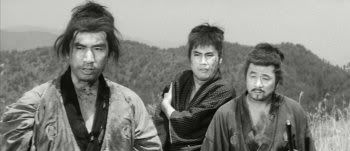
A wandering ronin (Tetsuro Tamba) gets caught up in the middle of a conflict between rebelling peasants and corrupted officials in Hideo Gosha terrific samurai thriller that was also the master’s big screen debut. While technically superb and well acted it’s the psychological undertones that are the strongest area. Honor and duty have started losing their value when the samurai have been made outlaws and guns for hire against their own will, and the officials pay anyone willing to do their dirty work. Some try to follow the traditions, others think about survival, and some try to find a balance between the two. As the film’s third outlaw samurai Mikijiro Hira puts it: ”I have not yet decided on which side I will be tomorrow”.
The Magnificent Trio (Hong Kong, 1966) – 2/5
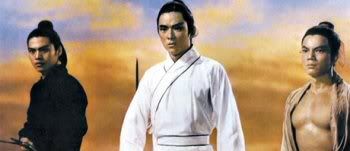
Chang Cheh’s swordplay film manages to entertain enough to deserve a one time view, but is fatally weakened by one big flaw; the same film was already done two years ago by another filmmaker. The Magnificent Trio is a direct remake of Hideo Gosha’s Three Outlaw Samurai, only lacking Gosha’s eye for details. Cheh has copied the storyline and and repeats almost every plot turn. The characteristics of the leading trio have been slightly modified by glorifying the heroic image and removing some of the anti-hero aspects of Gosha’s characters. The same kind of adjustment actually applies to the entire film. The leading actors (Cheng Lui, Lo Lieh and Wang Yu), however, are fun to watch even if they pale in comparison to the original trio. Cheh’s heroic bloodshed philosophy is visible in the action packed finale.
The patriots vs the outlaws
Naomi Tani in her usual housewife to be tortured role in Masaru Konuma’s most critically appraised film. It’s yet another appalling sm fest with over-rated cinematography and a touch of artism. A couple of good moments and effective ending have found their way into the film. Of course it was Nikkatsu’s biggest hit of the year and now a celebrated piece of Japanese film history.
Love Hotel (Japan, 1985) – 4/5
How did the best Japanese director of the 80’s end up helming a roman porno feature? Well, this was produced by The Director’s Company and only distributed by Nikkatsu. Based on Takashi Ishii’s terrific screenplay it’s a story of a man who, after losing everything, falls in love with a part-time prostitute. Somai’s trademarks are clearly visible, most impressively in the cinematography (courtesy of Shunji Iwai’s frequent collaborator Noboru Shinoda). The long takes are plenty, but perfectly natural. Not all viewers even notice that for example the love hotel scene at the end is shot with one take. It lasts over 10 minutes. The Yokohama Film Festival didn’t leave the film’s merits unnoticed; Best Film, Best Director, Best Screenplay, Best Cinematography, Best Actor and best Best New Actress.
Three Outlaw Samurai (Japan, 1964) – 4/5
A wandering ronin (Tetsuro Tamba) gets caught up in the middle of a conflict between rebelling peasants and corrupted officials in Hideo Gosha terrific samurai thriller that was also the master’s big screen debut. While technically superb and well acted it’s the psychological undertones that are the strongest area. Honor and duty have started losing their value when the samurai have been made outlaws and guns for hire against their own will, and the officials pay anyone willing to do their dirty work. Some try to follow the traditions, others think about survival, and some try to find a balance between the two. As the film’s third outlaw samurai Mikijiro Hira puts it: ”I have not yet decided on which side I will be tomorrow”.
The Magnificent Trio (Hong Kong, 1966) – 2/5
Chang Cheh’s swordplay film manages to entertain enough to deserve a one time view, but is fatally weakened by one big flaw; the same film was already done two years ago by another filmmaker. The Magnificent Trio is a direct remake of Hideo Gosha’s Three Outlaw Samurai, only lacking Gosha’s eye for details. Cheh has copied the storyline and and repeats almost every plot turn. The characteristics of the leading trio have been slightly modified by glorifying the heroic image and removing some of the anti-hero aspects of Gosha’s characters. The same kind of adjustment actually applies to the entire film. The leading actors (Cheng Lui, Lo Lieh and Wang Yu), however, are fun to watch even if they pale in comparison to the original trio. Cheh’s heroic bloodshed philosophy is visible in the action packed finale.
The patriots vs the outlaws
-
Markgway

- Bruce Lee's Fist
- Posts: 20194
- Joined: 18 Feb 2005, 02:04

-
HungFist
- Bruce Lee's Fist
- Posts: 11932
- Joined: 14 Dec 2005, 15:50
- Location: Japan

-
HungFist
- Bruce Lee's Fist
- Posts: 11932
- Joined: 14 Dec 2005, 15:50
- Location: Japan
Brutal Tales of Chivalry (Japan, 1965) – 4/5
Yakuza god Ken Takakura stars a young man returning from war who inherits a gang from a dying boss. They’re trying to honest business in the fish market, but the rivalry gang that killed their old boss and is now trying to get their market share has given up on all honor codes. Slightly unoriginal but well acted opening for the long running Brutal Tales of Chivalry ninkyo yakuza series. Co-star Ryo Ikebe, whose encounters with Takakura would soon become the highlights of series, plays a man who’s come into town to look for his sister.
Brutal Tales of Chivalry 2 (Japan, 1966) – 4,5/5
Takakura returns to this sequel as a man who must kill the boss of a family in order to buy his brother’s freedom. Three years later he when he’s released from prison he meets the son and wife of the man he killed. Wonderfully written film with perfect acting from Takakura, Ikebe and female lead Yoshiko Mita. The near perfect yakuza eiga is only weakened by one dimentional villains.
Brutal Tales of Chivalry 3 (Japan, 1966) – 2,5/5
Part three turns the Takakura-Ikebe character composition of the previous film upside down, but the screenplay hampers with some poor supporting characters and predictable storyline. It’s a shame as the Takakura and Ikebe pairing is as efficient as usual, and Junko Fuji – making her debut in the series – is nothing short of excellent. The action scenes are also the most impressive in the series so far.
Sadistic & Masochistic (Japan, 2001) – 4/5
Ringu man Hideo Nakata’s terrific documentary on director Masaru Konuma. A former assistant director of Konuma’s, Nakata examines his mentor’s career from the beginning, discusses the films and the industry with the man himself, and interviews directors, cinematographers and actors from Koyu Ohara to Naosuke Kurosawa and Yuko Katagiri. One of the highlights comes when Nakata arranges a meeting for Konuma and his trusted lady Naomi Tani –retired from movie industry since the end of 1970’s. Add insightful behind the scenes stories by assistant directors who wanted to kill Konuma and rare stills of the Nikkatsu kings together in a meeting and you have pretty much the best documentary imaginable about the subject.
2LDK (Japan, 2003) – 3/5
The hardness of living together. I first saw this some 5 years ago. Today, being a student myself, I suddenly understand this film so much better... 2LDK is the first part in the Duel Project - Yukihiko Tsutsumi and Ryuhei Kitamura’s agreement to deliver a pair films that are shot within a week, in one location, and end with a death duel between the two main characters - and approximately as good as it’s rival. But while Kitamura was dumb enough to stuck himself with two samurai warriors, Tsutsumi set the fight between two young female actresses that are after the same role... and live in the same apartment. Maho Nonami can get a bit irritating at times but Eiko Koike acts better than a gravure idol ought to. The film isn’t quite as clever as it attempts to be, but it is funny for the most part. Also excellent ending song by Yuko Ando.
Aragami (Japan, 2003) – 3/5
Kitamura’s contribution to the Duel project doesn’t differ significantly from most of his other movies in terms of style. But has interesting starting point that slightly resembles classic European horror tales; a wounded warrior (Takao Osawa) finds shelter from a distant temple. The owner (Masaya Kato), a self-assured loner, welcomes his guest, but seems unwilling to let the man go when his wounds have healed. It’s 60 minutes of dialogue followed by 20 minutes of fighting. The single room setting provides Kitamura with plenty of changes to play with his trademark 360 degree camera spin. Soundtrack, acting and action are all decetly good, but there’s a bit of overlength to such a simple story. Humour is sparse, but well used.
Moon Child (Japan, 2003) – 1,5/5
Takahisa Zeze’s vampire actioner has a fighteningly bad start with pop stars Gackt and Hyde showcasing some remarkably bad acting and even more clumsy gunplay. However, the overlong epic improves during its second hour and leaves a decent aftertaste... if you make it that far. Anne Suzuki makes a brief appearance near the end. Ryo Ishibashi is another cast member who can actually act. Shot half in Chinese, with the rest in Japanese and a bit of Engrish thrown in.
Yakuza god Ken Takakura stars a young man returning from war who inherits a gang from a dying boss. They’re trying to honest business in the fish market, but the rivalry gang that killed their old boss and is now trying to get their market share has given up on all honor codes. Slightly unoriginal but well acted opening for the long running Brutal Tales of Chivalry ninkyo yakuza series. Co-star Ryo Ikebe, whose encounters with Takakura would soon become the highlights of series, plays a man who’s come into town to look for his sister.
Brutal Tales of Chivalry 2 (Japan, 1966) – 4,5/5
Takakura returns to this sequel as a man who must kill the boss of a family in order to buy his brother’s freedom. Three years later he when he’s released from prison he meets the son and wife of the man he killed. Wonderfully written film with perfect acting from Takakura, Ikebe and female lead Yoshiko Mita. The near perfect yakuza eiga is only weakened by one dimentional villains.
Brutal Tales of Chivalry 3 (Japan, 1966) – 2,5/5
Part three turns the Takakura-Ikebe character composition of the previous film upside down, but the screenplay hampers with some poor supporting characters and predictable storyline. It’s a shame as the Takakura and Ikebe pairing is as efficient as usual, and Junko Fuji – making her debut in the series – is nothing short of excellent. The action scenes are also the most impressive in the series so far.
Sadistic & Masochistic (Japan, 2001) – 4/5
Ringu man Hideo Nakata’s terrific documentary on director Masaru Konuma. A former assistant director of Konuma’s, Nakata examines his mentor’s career from the beginning, discusses the films and the industry with the man himself, and interviews directors, cinematographers and actors from Koyu Ohara to Naosuke Kurosawa and Yuko Katagiri. One of the highlights comes when Nakata arranges a meeting for Konuma and his trusted lady Naomi Tani –retired from movie industry since the end of 1970’s. Add insightful behind the scenes stories by assistant directors who wanted to kill Konuma and rare stills of the Nikkatsu kings together in a meeting and you have pretty much the best documentary imaginable about the subject.
2LDK (Japan, 2003) – 3/5
The hardness of living together. I first saw this some 5 years ago. Today, being a student myself, I suddenly understand this film so much better... 2LDK is the first part in the Duel Project - Yukihiko Tsutsumi and Ryuhei Kitamura’s agreement to deliver a pair films that are shot within a week, in one location, and end with a death duel between the two main characters - and approximately as good as it’s rival. But while Kitamura was dumb enough to stuck himself with two samurai warriors, Tsutsumi set the fight between two young female actresses that are after the same role... and live in the same apartment. Maho Nonami can get a bit irritating at times but Eiko Koike acts better than a gravure idol ought to. The film isn’t quite as clever as it attempts to be, but it is funny for the most part. Also excellent ending song by Yuko Ando.
Aragami (Japan, 2003) – 3/5
Kitamura’s contribution to the Duel project doesn’t differ significantly from most of his other movies in terms of style. But has interesting starting point that slightly resembles classic European horror tales; a wounded warrior (Takao Osawa) finds shelter from a distant temple. The owner (Masaya Kato), a self-assured loner, welcomes his guest, but seems unwilling to let the man go when his wounds have healed. It’s 60 minutes of dialogue followed by 20 minutes of fighting. The single room setting provides Kitamura with plenty of changes to play with his trademark 360 degree camera spin. Soundtrack, acting and action are all decetly good, but there’s a bit of overlength to such a simple story. Humour is sparse, but well used.
Moon Child (Japan, 2003) – 1,5/5
Takahisa Zeze’s vampire actioner has a fighteningly bad start with pop stars Gackt and Hyde showcasing some remarkably bad acting and even more clumsy gunplay. However, the overlong epic improves during its second hour and leaves a decent aftertaste... if you make it that far. Anne Suzuki makes a brief appearance near the end. Ryo Ishibashi is another cast member who can actually act. Shot half in Chinese, with the rest in Japanese and a bit of Engrish thrown in.
-
HungFist
- Bruce Lee's Fist
- Posts: 11932
- Joined: 14 Dec 2005, 15:50
- Location: Japan
Love Letter (Japan, 1981) – 1/5
Nikkatsu celebrates their 10 years of Meisaku Roman with a serious melodrama. Soundtrack, writing and cinematography aren’t especially bad, but don’t have any notable attributes either. The same can be said about the entire film. Just another routine drama among others. The Japanese Academy honored Katsuo Nakamura’s performance with the Best Actor award.
Shamo (Hong Kong / Japan, 2007) – 1,5/5
Down goes Soi Cheang. 105 minutes of beat em up violence when a 16 year old killer turns into a fighting machine in prison, and tries to get even with the unfair world when he’s released. Shawn Yue is decently good in the lead role, and the manga feel is strong. Too bad they only rarely manage to overcome the bland execution. The director’s eye for visuals seem to have gone half-blind, too. Nice to see Weiying Pei on screen again, though.
Nikkatsu celebrates their 10 years of Meisaku Roman with a serious melodrama. Soundtrack, writing and cinematography aren’t especially bad, but don’t have any notable attributes either. The same can be said about the entire film. Just another routine drama among others. The Japanese Academy honored Katsuo Nakamura’s performance with the Best Actor award.
Shamo (Hong Kong / Japan, 2007) – 1,5/5
Down goes Soi Cheang. 105 minutes of beat em up violence when a 16 year old killer turns into a fighting machine in prison, and tries to get even with the unfair world when he’s released. Shawn Yue is decently good in the lead role, and the manga feel is strong. Too bad they only rarely manage to overcome the bland execution. The director’s eye for visuals seem to have gone half-blind, too. Nice to see Weiying Pei on screen again, though.
-
luckystars

- Royal Tramp
- Posts: 1893
- Joined: 12 Sep 2005, 08:01

-
HungFist
- Bruce Lee's Fist
- Posts: 11932
- Joined: 14 Dec 2005, 15:50
- Location: Japan
Full Alert (Hong Kong, 1997) – 4/5
Ringo Lam’s hard hitting cop thriller surprises with its realism. There’s a couple of small flaws (those damned flashbacks) but the atmosphere and good acting by Lau Ching Wan and Francis Ng make up for it. Also included is an excellent car chase sequence.
Black Magic (Hong Kong, 1975) – 2/5
Death magic, lightning magic, and love magic... that requires breast milk to work. It’s a fun first half, but unfortunately later the film starts repeating itself and doesn’t manage to raise the stakes. When the final confrontation comes you can hardly even keep tracks who’s under whose spell. No match for the brutally powerful 80’s black magic thrillers.
Ringo Lam’s hard hitting cop thriller surprises with its realism. There’s a couple of small flaws (those damned flashbacks) but the atmosphere and good acting by Lau Ching Wan and Francis Ng make up for it. Also included is an excellent car chase sequence.
Black Magic (Hong Kong, 1975) – 2/5
Death magic, lightning magic, and love magic... that requires breast milk to work. It’s a fun first half, but unfortunately later the film starts repeating itself and doesn’t manage to raise the stakes. When the final confrontation comes you can hardly even keep tracks who’s under whose spell. No match for the brutally powerful 80’s black magic thrillers.
-
diceman

- Pedicab Driver
- Posts: 244
- Joined: 20 Nov 2008, 16:10
- Location: Germany
Lol, I ordered the DVD a week ago. Kinda looking forward to it, too.HungFist wrote:Wife to Be Sacrificed (Japan, 1974) – 1/5
Naomi Tani in her usual housewife to be tortured role in Masaru Konuma’s most critically appraised film. It’s yet another appalling sm fest with over-rated cinematography and a touch of artism. A couple of good moments and effective ending have found their way into the film. Of course it was Nikkatsu’s biggest hit of the year and now a celebrated piece of Japanese film history.

-
HungFist
- Bruce Lee's Fist
- Posts: 11932
- Joined: 14 Dec 2005, 15:50
- Location: Japan
I hope you ordered the remasted R1, because it features Hideo Nakata's terrific Sadistic and Masochistic as an extra. That doc is easily worth the price alone (I'd even get it on R2J if it wasn't available cheaper).diceman wrote:Lol, I ordered the DVD a week ago. Kinda looking forward to it, too.HungFist wrote:Wife to Be Sacrificed (Japan, 1974) – 1/5
Naomi Tani in her usual housewife to be tortured role in Masaru Konuma’s most critically appraised film. It’s yet another appalling sm fest with over-rated cinematography and a touch of artism. A couple of good moments and effective ending have found their way into the film. Of course it was Nikkatsu’s biggest hit of the year and now a celebrated piece of Japanese film history.
I the only good Masaru Konuma films I've come across are Woman in the Box II (beautiful, unique horror gem) and Image of a Bound Girl (has unexpected psychological depth). Wife to Be Sacrificed, Woman in the Box I, Flower and Snake, Noble Lady, Nureta tsubo... they're all crap.
-
saltysam
- Bruce Lee's Fist
- Posts: 9357
- Joined: 27 Oct 2004, 18:27
Desperate Chase 3/5
I'm a sucker for these 70's Jimmy Wang Yu epics and here's another one.Jimmy plays a loner who decides to help a young boy deliver a bamboo stick to a rebel to fulfill a dying man's last wish.obviously things aren't going to be as straightforward as that...this german dvd looks rough but is 2:35:1 anamorphic and probably the best release in existence.unfortunately the mandarin soundtrack has no english subs so we are stuck with a choice of 2 english dubs,one which retains the original score but has horrible cockney dubbing and another with better dubbing but a horrible techno type music score. the german print used is censored,luckily the cut scenes have been inserted back in from a widescreen vhs source.this works well for the most part,however most of the cuts occur during the climactic 20 minute fight and the shifting of quality can be a little jarring.
I'm a sucker for these 70's Jimmy Wang Yu epics and here's another one.Jimmy plays a loner who decides to help a young boy deliver a bamboo stick to a rebel to fulfill a dying man's last wish.obviously things aren't going to be as straightforward as that...this german dvd looks rough but is 2:35:1 anamorphic and probably the best release in existence.unfortunately the mandarin soundtrack has no english subs so we are stuck with a choice of 2 english dubs,one which retains the original score but has horrible cockney dubbing and another with better dubbing but a horrible techno type music score. the german print used is censored,luckily the cut scenes have been inserted back in from a widescreen vhs source.this works well for the most part,however most of the cuts occur during the climactic 20 minute fight and the shifting of quality can be a little jarring.
-
saltysam
- Bruce Lee's Fist
- Posts: 9357
- Joined: 27 Oct 2004, 18:27
-
HungFist
- Bruce Lee's Fist
- Posts: 11932
- Joined: 14 Dec 2005, 15:50
- Location: Japan
Hell Has no Boundary (Hong Kong, 1982) – 1/5
A possessed girl uses her supernatural powers to take revenge on everyone who has done her wrong. Promising first 30 seconds, followed by uneffective next 30 minutes, and then nothing worth seeing at all. Surprisingly, the same director was able to come up with a very solid thriller next year with Seeding of a Ghost.
The Golden Buddha (Hong Kong, 1966) – 2,5/5
Spy esque Thailand adventure (with recycled Bond music) from Lo Wei. A good amount of fun, including femme fatales and fight sequences where every punch misses by 15 cm, but the running time is too long. 15 minutes away would make the film notably more compact, and not really any less logical than it is now
A possessed girl uses her supernatural powers to take revenge on everyone who has done her wrong. Promising first 30 seconds, followed by uneffective next 30 minutes, and then nothing worth seeing at all. Surprisingly, the same director was able to come up with a very solid thriller next year with Seeding of a Ghost.
The Golden Buddha (Hong Kong, 1966) – 2,5/5
Spy esque Thailand adventure (with recycled Bond music) from Lo Wei. A good amount of fun, including femme fatales and fight sequences where every punch misses by 15 cm, but the running time is too long. 15 minutes away would make the film notably more compact, and not really any less logical than it is now
Last edited by HungFist on 03 Dec 2008, 20:33, edited 1 time in total.
-
saltysam
- Bruce Lee's Fist
- Posts: 9357
- Joined: 27 Oct 2004, 18:27
Fearless Director's Cut usa Blu-ray 4.5/5
A Film that improves with every viewing,i much prefer this director's cut apart from the rather pointless bookend scenes featuring Michelle Yeoh. there are 3 versions of the film to select from on the disc, theatrical,unrated and the DC. one small annoyance is the way the subs stay on for the bits of english language dialogue in the film.other than that the blu-ray looks ace.
A Film that improves with every viewing,i much prefer this director's cut apart from the rather pointless bookend scenes featuring Michelle Yeoh. there are 3 versions of the film to select from on the disc, theatrical,unrated and the DC. one small annoyance is the way the subs stay on for the bits of english language dialogue in the film.other than that the blu-ray looks ace.